
#Daily Diary

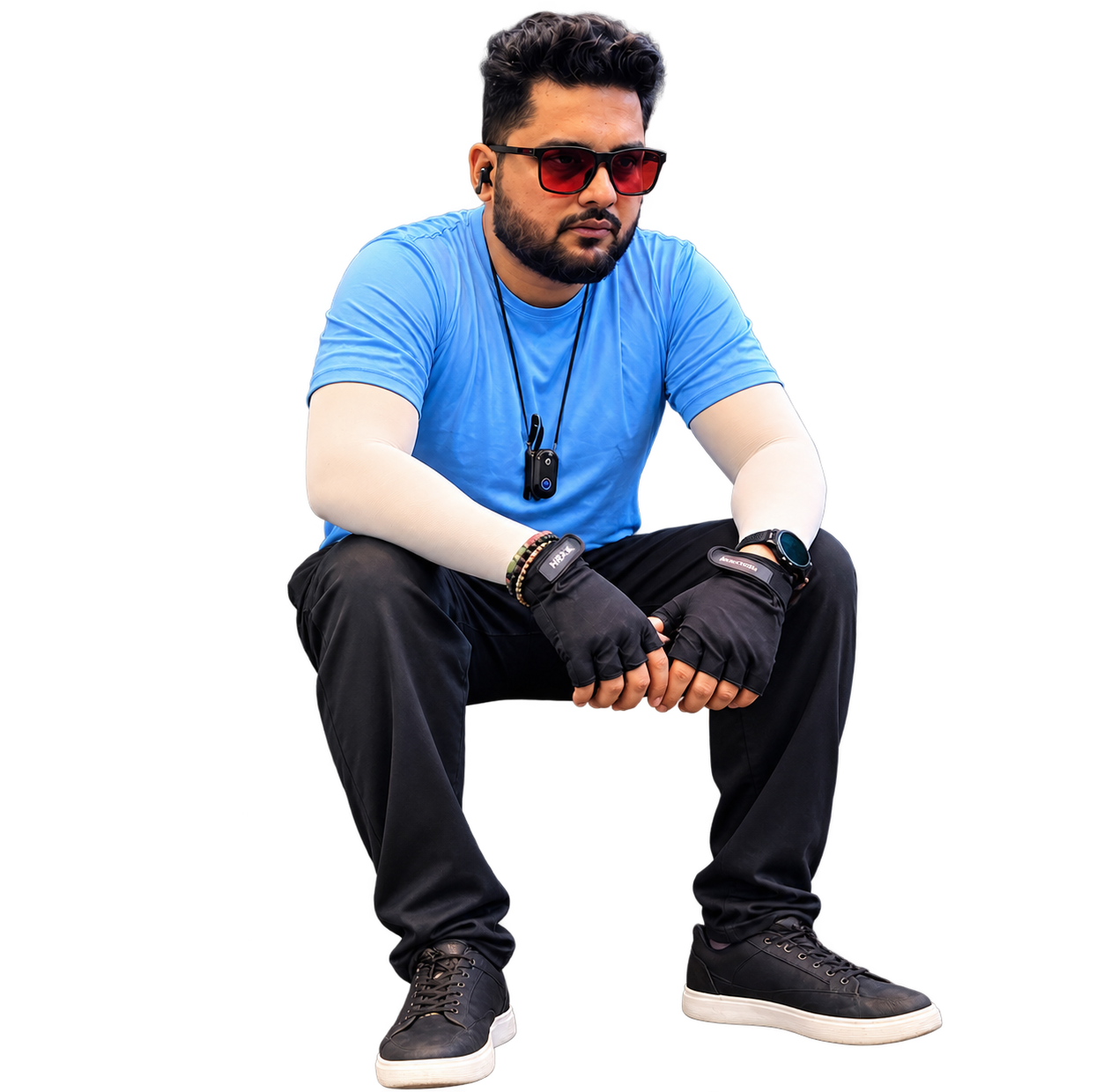
HYBRID ATHLETE
A year-long progression combining maximal strength, strongman, powerlifting, Olympic weightlifting, arm-wrestling strength, 100–400 m speed, 5–10 km endurance, daily mobility and core work.
MAX STRENGTH
Build squat, bench, deadlift and overhead strength with progressive loading.
POWER + SPEED
Olympic lifts, jumps and weekend sprint work develop rate of force and acceleration.
STRONGMAN + GRIP
Carries, loading, pulls and arm-wrestling work build practical full-body strength.
ENDURANCE
Progress from aerobic base toward controlled 5–10 km weekend running.

PRIMARY OBJECTIVES
Six connected qualities. The program rotates emphasis instead of trying to peak every quality at once.
Maximum Strength
Progressive compound lifting, structural stability, bracing and neural strength.
Explosive Power
Weightlifting derivatives, jumps and throws to improve force development and athletic output.
Speed
Saturday sprint progression built around 100 m, 200 m and 400 m mechanics and speed endurance.
Endurance
Sunday running progresses from aerobic conditioning toward 5–10 km capacity and pacing.
Mobility + Core
Daily ankle, hip, thoracic spine, shoulder and hamstring mobility plus anti-extension, anti-rotation and trunk strength.
Body Composition
Gradual fat loss while preserving or building muscle through strength training, nutrition and recovery.
WEEKLY ARCHITECTURE
Strength and conditioning stay on weekdays; running is reserved for Saturday and Sunday as requested.
POWERLIFT A
Squat + bench emphasis
Accessory pull/push
Arm-wrestling
STRONGMAN
Deadlift / carry / loading
Grip + trunk
Upper-back work
WEIGHTLIFTING
Clean / snatch derivatives
Overhead strength
Explosive accessories
POWERLIFT B
Bench + squat/deadlift variation
Arm-wrestling
Hypertrophy
HYBRID
Full-body strength
Strongman / grip
Low-fatigue accessories
SPRINT DAY
Acceleration + mechanics
100 / 200 / 400 m focus
Plyometrics
ENDURANCE
Easy → steady running
5–10 km progression
Recovery finish
THE 365-DAY PROGRESSION
Each block has a dominant training objective while the other qualities are maintained.
FOUNDATION
Technique • work capacity • movement quality
HYPERTROPHY
Muscle gain • volume tolerance • joint control
STRENGTH BASE
Squat • bench • deadlift • overhead strength
MAX STRENGTH I
Heavy compounds • bracing • neural strength
POWER
Olympic lifts • jumps • throws • speed-strength
STRONGMAN
Carries • loading • pulls • overhead events
HYBRID STRENGTH
Strength + power integration without excess fatigue
100 / 200M
Acceleration • max velocity • sprint mechanics
200 / 400M
Speed endurance • lactate tolerance • pacing
5K ENGINE
Aerobic development • threshold • running economy
5–10K ENDURANCE
Longer aerobic work • pacing • fatigue resistance
PEAK HYBRID
Strength maintenance • speed quality • endurance sharpness
TEST + RECOVER
Deload • mobility • benchmark testing • reset
THE FOUR LIFTS
 SQUAT • LOWER BODY
 BENCH • PRESSING
 PRESS • POWER
 DEADLIFT • POSTERIOR CHAIN
BODY COMPOSITION TARGET
Use the scale and waist as trend metrics, not as a reason to sacrifice training quality or recovery.
PROGRESSION RULE
- Main lifts: add load only when technique and target RPE are controlled.
- Most working sets: leave roughly 1–3 reps in reserve.
- Every 4th week: reduce volume and/or load to absorb training.
- Test strength and speed at the end of major blocks rather than weekly.
RECOVERY RULE
- Prioritize consistent sleep, hydration and adequate protein.
- Keep weekday cardio mostly easy so it does not compromise lifting.
- Saturday sprint quality comes before sprint quantity.
- Sunday endurance should usually be easy enough to recover for Monday.
365-DAY HYBRID ATHLETE • STRENGTH × POWER × SPEED × ENDURANCE × MOBILITY
This infographic is a program framework; exact loads, sprint volumes and running distances should be adjusted to current performance, recovery and injury status.
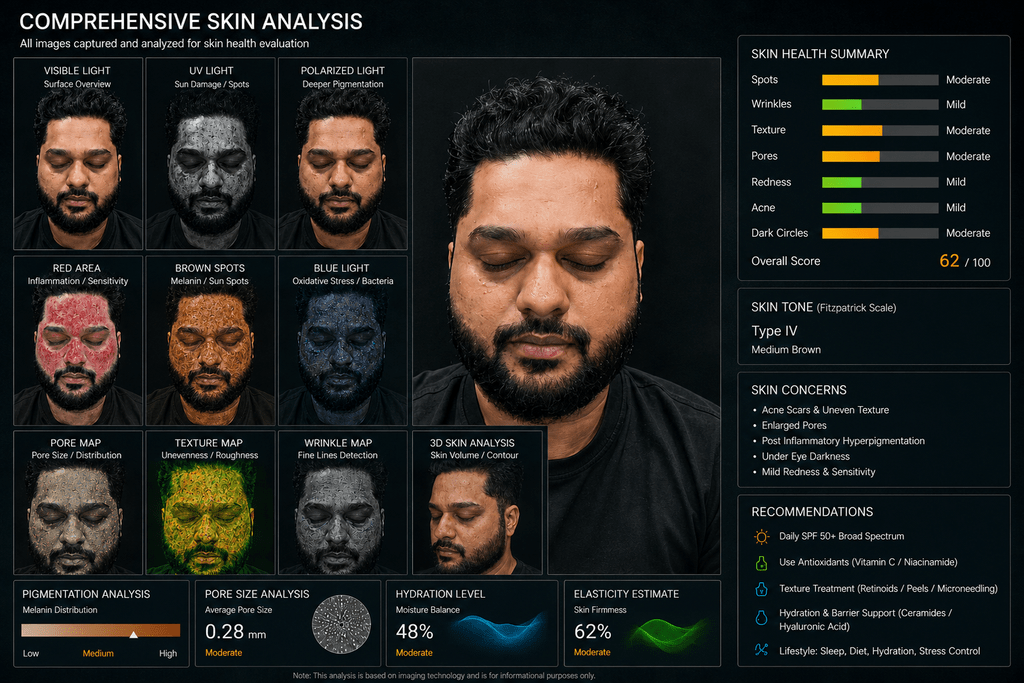
REGEN-30
A structured anti-ageing and biological-regeneration protocol covering biomarkers, skin, hair, beard, oral health, photobiomodulation, recovery and a targeted longevity supplement system.
BIOMARKERS
Track systemic health, inflammation, metabolic function, hormones and research-oriented biological-age markers.
SKIN + HAIR
Daily skincare, active rotation, scalp care, premature-greying care and red-light interventions.
ORAL HEALTH
Brushing, tongue cleaning, interdental care, mouthwash, xylitol and targeted oral-light sessions.
RECOVERY
Massage, compression, Curapod, TENS and photobiomodulation integrated into recovery tracking.

REGEN-30 OBJECTIVES
Core domains of the regeneration system, organized in the same modular box structure as the 365-Day Hybrid Athlete page.
Biological Age
Build a longitudinal record of conventional clinical biomarkers and research-oriented ageing markers including telomere length, epigenetic age and glycan age.
Brain + Nervous System
Track Neurofilament light (NfL), GFAP, tau/p-tau and BDNF together with cognitive and recovery observations.
Cardiovascular
Track blood pressure, resting heart rate, HRV, cardio fitness, lipid markers, ApoB, ApoA1 and Lp(a).
Kidney + Uric Acid
Track creatinine, eGFR, cystatin C, urea/BUN and uric acid as part of the renal and metabolic system.
Liver + Metabolic Health
Track ALT, AST, GGT, ALP, bilirubin, albumin, glucose, HbA1c, fasting insulin, C-peptide and HOMA-IR.
Muscle + Bone
Track performance, recovery and relevant tissue markers together with calcium, magnesium, phosphate and bone status.
Immune + Inflammation
Track CBC, hs-CRP/CRP, ESR, ferritin and selected immune markers including IgG, IgA, IgM, IL-6 and TNF-α.
Skin Regeneration
Maintain cleanser, antioxidant, niacinamide, moisturizer, sunscreen and controlled active-treatment routines.
Hair + Beard
Integrate anti-greying shampoo/conditioner, Arata serum, minoxidil serum, red-light cap and beard care.
Oral Health
Maintain brushing, tongue cleaning, interdental cleaning, water flosser, mouthwash, xylitol and oral-light care.
Photobiomodulation
Track red/infrared/blue-light interventions for hair, face and oral care, including the NOCTIX protocol.
Recovery
Use massage, compression, Curapod and TENS within a structured recovery log with before/after observations.
BIOMARKER ARCHITECTURE
Detailed laboratory and research tracking framework for REGEN-30.
CBC / HEMATOLOGY
Complete blood and red-cell status.
KIDNEY + URIC ACID
Renal filtration and urate monitoring.
ELECTROLYTES + MINERALS
Fluid, electrolyte and mineral status.
LIVER
Hepatic enzymes and protein function.
GLUCOSE CONTROL
Insulin sensitivity and glycemic status.
CARDIOVASCULAR RISK
Lipid and apolipoprotein profile.
INFLAMMATION + IRON
Inflammatory and iron-status tracking.
VITAMINS + TRACE ELEMENTS
Selected nutrient status.
THYROID + HORMONES
Thyroid and endocrine profile.
PERFORMANCE MARKERS
Exercise load and tissue-response markers.
IMMUNE MARKERS
Selected immune-status measurements.
EXPERIMENTAL AGEING
Research-oriented biological-age measurements.
BRAIN + CARDIORESPIRATORY
Specialized systems retained as dedicated REGEN-30 tracking modules.
SKIN SYSTEM
REGEN-30 skincare architecture using the previously specified products.
MORNING • DAILY
- Minimalist Oat Extract Cleanser
- Vitamin C + E + Ferulic 16% Serum
- Niacinamide 10% Serum
- Minimalist Ceramides Moisturizer
- SPF 50 Sunscreen
EVENING • ACTIVE ROTATION
- Minimalist Oat Extract Cleanser
- Retinol 0.3% Serum
- Minimalist Salicylic Acid 0.2% Serum
- Minimalist PHA 3% Toner
- Ceramides moisturizer / recovery as required
WEEKLY / CONTROLLED ACTIVE
- Minimalist AHA/BHA/PHA 32% Face Peel
- Keep strong active treatments separated rather than stacking them.
- Track irritation, dryness, texture and tolerance.
TARGETED CARE
- Minimalist Dark Circle Under Eye Cream
- Vitamin K
- Minimalist Underarm Roll-On
HAIR + BEARD SYSTEM
Scalp, hair, premature-greying and beard components of the protocol.
Anti-Greying Shampoo
The Man Company anti-greying shampoo as part of the scalp and hair-care routine.
Conditioner
The Man Company conditioner for routine hair conditioning.
Arata Serum
Arata serum for premature greying as specified in the REGEN-30 system.
Minoxidil Serum
Minoxidil serum included for scalp/hair management according to product or clinical instructions.
Red-Light Therapy Cap
Red-light therapy cap for scalp/hair photobiomodulation and longitudinal tracking.
Beard Care
The Man Company beard cream for beard maintenance and grooming.
ORAL HEALTH SYSTEM
Daily oral-care structure and targeted oral photobiomodulation.
Morning
Sensodyne Protect & Repair • 2-minute brushing • tongue cleaning • water rinse after meals.
Interdental
Perfora water flosser • interdental cleaning • xylitol gum after meals.
Evening
Sensodyne Protect & Repair • Sensodyne alcohol-free mouthwash • final oral-care session before sleep.
NOCTIX
660 nm red + 850 nm infrared + 450 nm blue • 10-minute sessions • 5×/week.
PHOTOBIOMODULATION
Separate tracking of face, hair, oral and body light-based interventions.
RECOVERY SYSTEM
Recovery modalities and the longitudinal log used to evaluate response.
Body Massage
Track treatment area, duration, intensity, muscular knots, pain/comfort before and after treatment.
Compression Therapy
Track area, duration, device setting and response according to device instructions.
Curapod
Use according to instructions and record treatment area, duration and response.
TENS Massager
Track placement, programme, duration and response according to device directions.
RECOVERY LOG
- Date
- Intervention
- Area
- Duration
- Intensity / programme
RESPONSE LOG
- Before score
- After score
- Next-day response
- Sleep / training context
- Notes
REGEN-30 SUPPLEMENT STACK
The supplement components previously specified for the REGEN-30 protocol.
MARINE COLLAGEN
Marine collagen.
STRUCTURALGLUTATHIONE
Glutathione.
REDOXCOQ10
CoQ10.
ENERGYFISH OIL
Omega-3 fish oil.
OMEGA-3CURCUMIN
Curcumin.
POLYPHENOLMAGNESIUM
Magnesium.
MINERALMELATONIN
Melatonin.
SLEEPVITAMIN B12
Vitamin B12.
MICRONUTRIENTVITAMIN D3
Vitamin D3.
MICRONUTRIENTASHWAGANDHA
Ashwagandha KSM-66.
BOTANICALNAD+
Planned addition.
PLANNEDTHE REGEN-30 CYCLE
Measure → intervene → recover → observe → re-measure.
MEASURE
Establish the starting biological and lifestyle record.
CARE
Execute skin, hair, beard and oral systems.
NOURISH
Apply the specified nutrition and supplement framework.
RECOVER
Manage recovery modalities and sleep.
TRACK
Record symptoms, tolerance, performance and changes.
RE-MEASURE
Compare results over time and continue the cycle.
REGEN-30 • Personal regeneration and longevity tracking system.
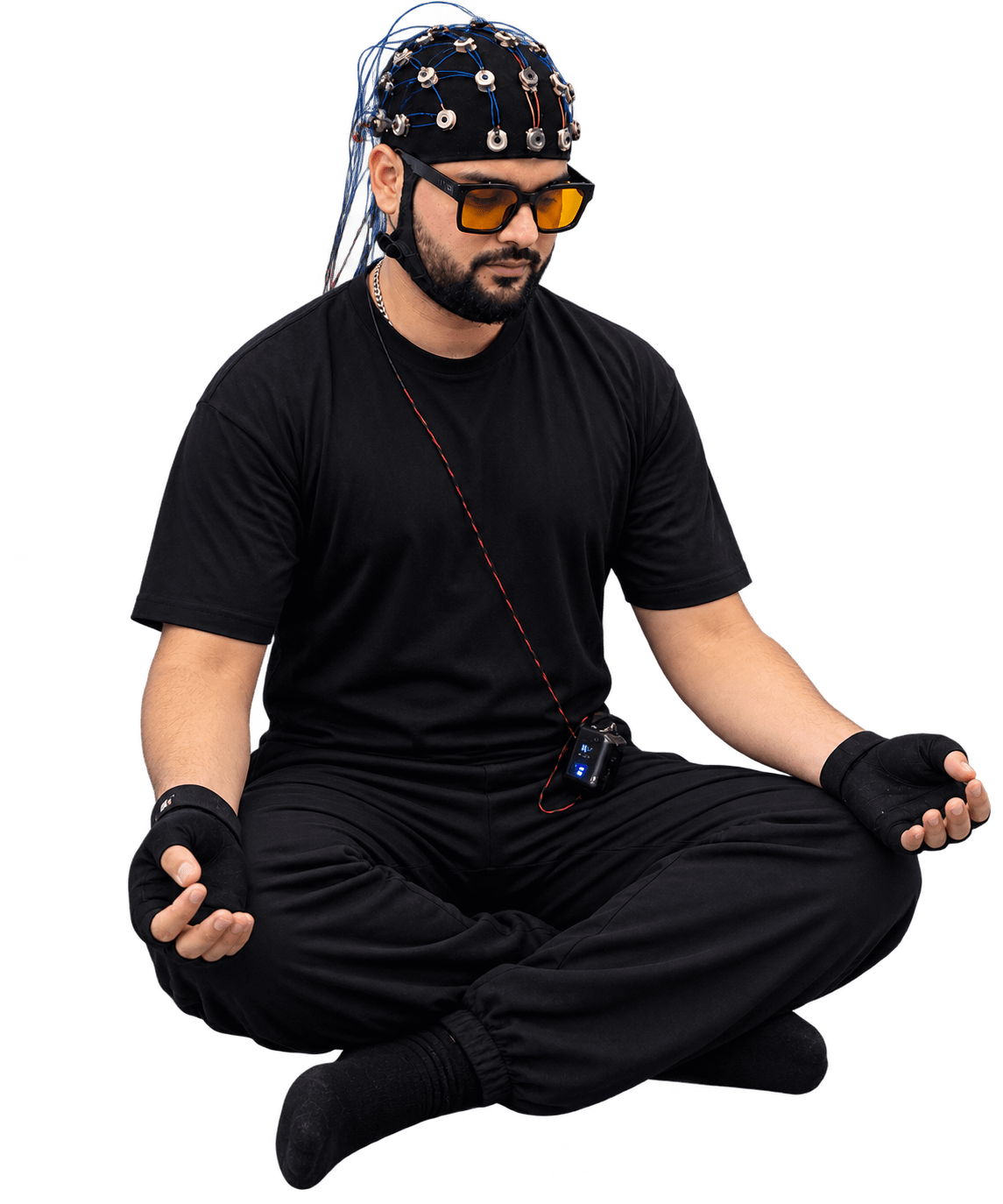
ULTRA MIND
An integrated mind-training system for conscious awareness, subconscious conditioning, superconscious integration, emotions, intelligence, cognitive development, multiple quotients, EEG tracking and long-term intellectual development.
CONSCIOUS
Awareness, attention, reasoning, planning, deliberate action and self-reflection.
SUBCONSCIOUS
Habits, implicit memory, automatic reactions, conditioned responses and automatic patterns.
SUPERCONSCIOUS
Visualization, mindfulness, reframing, exposure, pattern tracking, creativity and higher-order integration.
INTELLIGENCE
Learning, memory, reasoning, creativity, problem solving, emotional intelligence and multiple intelligence domains.

ULTRA MIND OBJECTIVES
Core domains of the mind-training system, organized in the same modular box structure as the REGEN-30 page.
Conscious Mind
Train awareness, attention, concentration, reasoning, planning, deliberate action, observation and self-reflection.
Subconscious Mind
Train habits, implicit memory, automatic reactions, conditioned responses, learned associations and automatic behavior.
Superconscious Mind
Use visualization, mindfulness, reframing, exposure, sleep, pattern tracking, perspective, creativity, integration and metacognition.
Emotions
Train emotional awareness, regulation, empathy, compassion, frustration tolerance and the ability to choose a response rather than automatically react.
Intelligence
Train learning, remembering, reasoning, creating, solving, cognitive flexibility, analytical ability and multiple forms of intelligence.
Quotients
Track IQ, EQ, SQ, AQ, CQ and the broader personal quotient framework used to organize different capabilities.
EEG
Record baseline EEG sessions, training-session context and longitudinal observations alongside cognitive and subjective data.
Integration
Combine conscious, subconscious, superconscious, emotional and intelligence training into one repeatable system.
180-DAY ARCHITECTURE
24 weeks, five domains and approximately 105 minutes per day. Every day touches all five systems while the emphasis rotates.
AWARENESS + CONTROL
Learn to observe and control your own mind.
INTELLIGENCE DEVELOPMENT
Build cognitive capacity through deliberate training.
EMOTIONAL INTELLIGENCE
Recognize, understand and regulate emotional responses.
SUBCONSCIOUS CONDITIONING
Identify, replace and repeat automatic patterns.
MULTI-INTELLIGENCE
Rotate through multiple intelligence domains.
INTEGRATION / SUPERCONSCIOUS
Develop perspective, creativity, wisdom and metacognition.
DAILY ARCHITECTURE
The repeatable 105-minute structure used throughout the 180-day system.
Morning • 45 min
Conscious: 10 min attention/meditation • Intelligence: 15 min cognitive exercise • Emotions: 10 min awareness • Superconscious: 10 min visualization/reflection.
Daytime • 30 min
Intelligence: 20 min deliberate learning • Subconscious: 10 min habit/behavior conditioning.
Evening • 30 min
Conscious: 10 min reflection/reasoning • Emotions: 10 min processing • Subconscious: 5 min trigger/habit review • Superconscious: 5 min visualization/meaning reflection.
Daily Rule
Every day touches all five systems: Conscious → Subconscious → Superconscious → Emotions → Intelligence.
DAILY CLOSING QUESTION
“Did I control my mind today, or did my automatic mind control me?”
CONSCIOUS MIND
Awareness and deliberate control.
Attention
Breath focus, object focus, single-tasking, concentration, observation and thought observation.
Reasoning
Reason, analyze, evaluate choices and deliberately decide rather than responding automatically.
Planning
Use deliberate action, structured thinking and conscious review of what you are about to do.
Self-Reflection
Review thoughts, decisions, attention, distractions, self-awareness and decision quality.
CONSCIOUS FORMULA
- Observe
- Focus
- Reason
- Decide
SUBCONSCIOUS MIND
Conditioning, habits and automatic patterns.
Automatic Patterns
Identify learned habits, implicit memories, automatic emotional reactions, unconscious biases and automatic perception.
Habit Replacement
Identify unwanted patterns, replace them with desired responses and repeat until the response becomes increasingly automatic.
IF X → THEN Y
Examples from the framework: if anger → pause; if procrastination → work five minutes; if unnecessary phone use → put it away; if fear → examine evidence.
Subconscious Journal
Record Trigger → Automatic thought → Automatic emotion → Automatic behavior → New response → YES/NO execution.
SUBCONSCIOUS FORMULA
- Condition
- Repeat
- Automate
SUPERCONSCIOUS MIND
Defined in the framework as the highest-order integration layer, with visualization, mindfulness, reframing, exposure, sleep, pattern tracking, creativity, perspective and metacognition.
Awareness • Days 151–157
Ask: What am I thinking? Why am I thinking it? What am I feeling? Why am I feeling it? What am I about to do?
Perspective • Days 158–164
Analyze one problem from your perspective, another person’s perspective, an outsider’s perspective, long-term, scientific, ethical and systems perspectives.
Creativity • Days 165–171
Generate 10 ideas, 10 questions, 10 solutions, 5 alternative explanations and 1 original project every day, then develop the best idea.
Wisdom • Days 172–178
Review what you learned, misunderstood, assumed incorrectly, noticed as a pattern, what matters long-term, and what to stop, continue and start.
SUPERCONSCIOUS FORMULA
- Reflect
- Visualize
- Integrate
- Understand
INTELLIGENCE MAP
All intelligence categories previously defined in the ULTRA MIND framework.
Cognitive / Analytical
Logical, deductive and inductive reasoning, critical thinking, problem solving, pattern recognition, abstract reasoning, systems thinking, strategy, decision-making and numerical reasoning.
Linguistic
Vocabulary, reading comprehension, writing, storytelling, verbal reasoning, rhetoric, persuasion, translation and communication.
Mathematical
Arithmetic, algebraic reasoning, geometry, probability, statistics, modelling and quantitative analysis.
Spatial
Visualization, mental rotation, navigation, 3D reasoning, design, map reading and spatial memory.
Scientific
Observation, hypothesis formation, experimental reasoning, evidence evaluation, causal reasoning, measurement and scientific modelling.
Creative
Imagination, originality, divergent thinking, idea generation, innovation, artistic creation, improvisation and concept development.
Emotional + Social
Self-awareness, emotional regulation, empathy, social awareness, cooperation, negotiation, conflict resolution and leadership.
Practical + Adaptive
Application of knowledge, troubleshooting, resource management, adaptability, real-world problem solving, flexibility and resilience.
Physical / Bodily
Coordination, balance, strength, speed, agility, fine motor control and body awareness.
Musical + Cultural
Rhythm, pitch, melody, harmony, musical memory, composition, cultural understanding and cross-cultural communication.
Metacognitive
Monitor reasoning, detect cognitive biases, identify what you do not know, self-correct and train how you learn.
Moral + Existential
Values, consequences, responsibility, meaning, purpose, existence, consciousness, reality and human nature.
Digital + Technological
Digital literacy, computational thinking, AI literacy, information evaluation, cyber awareness and technology problem solving.
Collective Intelligence
Collaboration, knowledge sharing, distributed problem solving and collective decision-making.
20 TYPES OF INTELLIGENCE
The separate 20-type intelligence curriculum previously defined for the long-term ULTRA MIND framework.
QUOTIENT FRAMEWORK
The quotient labels used in the personal ULTRA MIND training-and-tracking framework.
IQ • Intelligence Quotient
General cognitive ability, reasoning and problem-solving.
EQ • Emotional Quotient
Understanding and management of emotions.
SQ • Social Quotient
Social understanding and interpersonal effectiveness.
AQ • Adversity Quotient
Response to difficulties, setbacks and adversity.
CQ • Creativity Quotient
Creative thinking and originality.
CrQ • Cultural Quotient
Ability to function across cultures.
MQ • Moral Quotient
Moral reasoning and ethical behaviour.
DQ • Digital Quotient
Digital skills, awareness and responsible technology use.
LQ • Leadership Quotient
Leadership-related capabilities.
PQ • Physical Quotient
Physical capability, fitness and bodily performance.
SpQ • Spiritual Quotient
Meaning, purpose and existential/spiritual orientation.
PrQ • Practical Quotient
Practical problem-solving and application of knowledge.
InQ • Innovation Quotient
Innovation and novel-solution capacity.
KQ • Knowledge Quotient
Breadth and depth of knowledge.
RQ • Resilience Quotient
Capacity to recover and adapt after stress or setbacks.
MoQ • Motivation Quotient
Motivation, persistence and goal orientation.
AdQ • Adaptability Quotient
Ability to adjust to changing circumstances.
CoQ • Communication Quotient
Communication effectiveness.
NeQ • Negotiation Quotient
Negotiation and conflict-management capability.
TiQ • Technology Quotient
Technology understanding and application.
FiQ • Financial Quotient
Financial literacy and decision-making.
HeQ • Health Quotient
Health knowledge and behaviours as defined by the framework.
BoQ • Bodily-Kinesthetic Quotient
Physical coordination and body skills.
SeQ • Self-awareness Quotient
Understanding of thoughts, emotions and behaviour.
InQ • Interpersonal Quotient
Ability to interact effectively with others.
IntraQ • Intrapersonal Quotient
Understanding and management of oneself.
LeQ • Learning Quotient
Learning ability, habits and capacity.
MeQ • Metacognitive Quotient
Awareness and regulation of one’s own thinking.
DeQ • Decision-making Quotient
Decision-making capability.
StQ • Strategic Quotient
Strategic thinking and long-term planning.
TiQ • Time Quotient
How time is managed and used.
PrQ • Productivity Quotient
How effectively effort is converted into results.
ChQ • Character Quotient
Character-related qualities within the framework.
VaQ • Values Quotient
Alignment with personal and social values.
PhQ • Philosophical Quotient
Philosophical reasoning within the framework.
ExQ • Existential Quotient
Existential reflection and meaning-making.
NaQ • Nature Quotient
Relationship with and understanding of nature.
LiQ • Linguistic Quotient
Language ability.
NuQ • Numerical Quotient
Numerical ability.
SpQ • Spatial Quotient
Spatial reasoning.
MuQ • Musical Quotient
Musical ability.
WQ • Wisdom Quotient
Wisdom-related development in the long-term intelligence framework.
MemQ • Memory Quotient
Memory capability and development.
FQ • Focus Quotient
Focused attention and sustained concentration.
DecQ • Decision Quotient
Decision quality and decision-making practice.
ObsQ • Observation Quotient
Observation and attention-to-detail practice.
PerQ • Perception Quotient
Perception and situational awareness.
SyQ • Systems Quotient
Systems thinking and interconnected-problem analysis.
TQ • Technology Quotient
Technology skills and application in the intelligence curriculum.
AIQ • Artificial Intelligence Quotient
AI understanding and applied AI capability.
CnQ • Curiosity Quotient
Question generation and exploration.
ImQ • Imagination Quotient
Imagination and idea-generation capacity.
JQ • Judgment Quotient
Judgment, evidence evaluation and ethical decision-making.
BQ • Business Quotient
Business knowledge and capability.
FIQ • Financial Intelligence
Financial knowledge, literacy and decision-making.
ComQ • Communication Quotient
Communication, explanation, public speaking and persuasion.
LeadQ • Leadership Quotient
Leadership, delegation, motivation, team management and conflict resolution.
MEASUREMENT RULE
I treat these quotient labels as a personal training-and-tracking framework. They are not all standardized psychometric measures. When a specific test or app is used, record the date, score, scale and method.
THINKING SKILLS
The thinking-skill framework used to broaden reasoning and problem solving.
Critical Thinking
Evaluate claims, assumptions, evidence and reasoning.
Analytical Thinking
Break complex problems into components and evaluate relationships.
Creative Thinking
Generate divergent ideas and develop original solutions.
Strategic Thinking
Think long-term, plan and evaluate competing objectives.
Tactical Thinking
Translate strategy into immediate actions and choices.
Systems Thinking
Study interconnected systems, feedback, complexity and relationships.
Scientific Thinking
Use observation, hypotheses, evidence, measurement and causal reasoning.
Mathematical Thinking
Use abstraction, quantitative reasoning, probability and mathematical models.
Computational Thinking
Use algorithms, decomposition, patterns and computational problem solving.
Design Thinking
Develop, test and refine solutions around real problems.
Lateral Thinking
Break habitual patterns and explore alternative ways to approach a problem.
Abstract Thinking
Work with concepts, structures and relationships beyond concrete examples.
First-Principles Thinking
Reduce a problem to fundamental assumptions and rebuild the solution.
Probabilistic Thinking
Reason under uncertainty using probabilities and evidence.
Long-Term Thinking
Evaluate consequences, trade-offs and outcomes over extended time horizons.
Counterfactual Thinking
Explore alternative scenarios and ask what would change under different conditions.
MEMORY TRAINING
Memory systems, techniques and recall practice.
Working Memory
Train active manipulation and temporary retention of information.
Long-Term Memory
Build durable retention of facts, concepts and learned material.
Visual Memory
Train recall of visual information, images and spatial details.
Auditory Memory
Train recall of sounds, spoken information and sequences.
Semantic Memory
Train knowledge, concepts and meanings.
Episodic Memory
Train recall of events and contextual experiences.
Spatial Memory
Train locations, routes, layouts and spatial relationships.
Memory Palace
Use loci-based visualization to organize and recall information.
Chunking
Group information into meaningful units.
Active Recall
Retrieve information rather than only rereading it.
Spaced Repetition
Review information at increasing intervals.
Peg + Major Systems
Use structured mnemonic systems for names, facts, vocabulary and numbers.
20-MODULE INTELLIGENCE ACADEMY
The long-term module structure previously defined for broad intelligence development.
COGNITIVE INTELLIGENCE
Mathematics, formal logic, critical thinking, statistics, probability, programming, chess, puzzles and Olympiad problems.
EMOTIONAL INTELLIGENCE
Self-awareness, emotion regulation, empathy, motivation and conflict resolution.
SOCIAL INTELLIGENCE
Body language, conversation, charisma, persuasion, negotiation and networking.
CREATIVITY
Brainstorming, mind maps, story writing, drawing, music, design and inventing solutions.
ADAPTABILITY
Learn new skills, work in unfamiliar environments, learn different software and solve unfamiliar problems.
RESILIENCE + GRIT
Discipline, delayed gratification, long-term projects, endurance and finishing what you start.
FOCUS
Deep work, Pomodoro, mindfulness meditation and reading without distractions.
MEMORY
Memory Palace, spaced repetition, active recall, peg systems, Major System and visualization.
LEARNING INTELLIGENCE
Feynman Technique, Cornell Notes, active recall, spaced repetition, interleaving and retrieval practice.
KNOWLEDGE
Broad study across mathematics, physics, chemistry, biology, medicine, history, philosophy, economics, psychology, AI, engineering, literature and law.
BUSINESS + FINANCE
Accounting, investing, economics, marketing, sales, entrepreneurship, taxation and valuation.
COMMUNICATION
Public speaking, debate, storytelling, writing, teaching and persuasion.
LEADERSHIP
Delegation, decision-making, motivation, team management and conflict resolution.
DECISION MAKING
Bayesian reasoning, game theory, risk analysis, decision trees and cost-benefit analysis.
OBSERVATION + PERCEPTION
Sketch objects from memory, spot differences, analyze photographs, observe people without judging and practice mindfulness.
STRATEGIC + SYSTEMS THINKING
Systems thinking, complexity science, military strategy, business strategy and scenario planning.
TECHNOLOGY + AI
AI tools, prompt engineering, programming, automation, cybersecurity basics and cloud computing.
CURIOSITY + IMAGINATION + INNOVATION
Read outside your field, ask “Why?” and “What if?”, invent products and maintain an idea notebook.
HEALTH + PHYSICAL INTELLIGENCE
Strength, cardiovascular fitness, mobility, sleep hygiene, nutrition and recovery as part of cognitive performance.
WISDOM + ETHICS + JUDGMENT
Philosophy, ethics, history, psychology and cognitive biases.
LONG-FORM BRAIN TRAINING
The separate 2–4 hour daily brain-training architecture from the long-term intelligence curriculum.
MEMORY
Anki • Memory Palace • recall exercises
MEMQMATH + LOGIC
Mathematics and logic practice
IQREADING
Read a difficult book
KQPROGRAMMING
Programming or problem solving
TQ / AIQCHESS / GO
Strategic mind-sport practice
StQLANGUAGE
Language learning
LiQ / LQWRITING
Writing and summarizing
ComQMEDITATION
Focused attention and meditation
FQ / CONSCIOUSCREATIVITY
Creative thinking exercises
CQ / InQWEEKLY TRAINING LOAD
The separate long-form weekly schedule defined for the intelligence curriculum.
SUPERHUMAN MIND CURRICULUM
The interdisciplinary long-term curriculum previously defined for broad and adaptable intelligence.
Mathematics
Arithmetic • algebra • geometry • trigonometry • calculus • statistics • probability • number theory • Olympiad mathematics.
Science
Physics • chemistry • biology • astronomy • earth science • neuroscience • genetics • quantum mechanics.
Engineering
Mechanical • electrical • civil • computer • aerospace • robotics • nanotechnology • biotechnology.
Computer Science
Programming • algorithms • data structures • AI • machine learning • cybersecurity • networking • databases • cloud computing.
Medicine
Anatomy • physiology • pharmacology • pathology • surgery • radiology • psychiatry • nutrition.
Philosophy
Logic • ethics • metaphysics • epistemology • Eastern philosophy • Western philosophy.
Law
Constitutional law • criminal law • civil law • international law • human rights.
Finance
Economics • investing • accounting • business strategy • entrepreneurship.
History
Ancient • medieval • modern • military • economic • religious history.
Languages
Grammar • vocabulary • translation • literature • writing • public speaking.
LONG-TERM ROADMAP
The multi-year progression defined in the intelligence curriculum.
FOUNDATIONS
Reasoning, learning methods, memory, communication and health.
DEEPEN
Mathematics, science, programming, finance and emotional/social skills.
STRATEGY + AI
Leadership, strategy, systems thinking, AI and original projects.
RESEARCH + TEACHING
Teach others, conduct research, build businesses or organizations and work on interdisciplinary problems.
MASTERY + INNOVATION
Focus on mastery, innovation and applying skills to solve real-world challenges.
INTERDISCIPLINARY DEVELOPMENT
Continue interdisciplinary learning, conduct projects, teach others, publish work and solve increasingly complex real-world problems.
EEG TRACKING
Brain-wave records used as a longitudinal companion to the training system.
Baseline
Record baseline EEG sessions and the device settings used.
Training Sessions
Record session date, duration, task, conditions and relevant EEG observations.
Longitudinal Review
Compare EEG records with cognitive training, mind-sport practice, sleep and subjective observations.
Review Principle
Compare trends over time rather than treating one reading as a definitive measure of intelligence or brain health.
DAY 179 + DAY 180 ASSESSMENT
The final integration test and repeatable baseline-to-endpoint assessment framework.
Day 179 • Conscious
30-minute concentration.
Day 179 • Subconscious
Identify automatic triggers.
Day 179 • Superconscious
30-minute deep reflection.
Day 179 • Emotions
Analyze a difficult emotional event.
Day 179 • Intelligence
Memory + logic + mathematics + creativity.
Day 180 • Repeat Baseline
Perform the same tests used around Day 1 and compare the endpoint with the starting record.
COGNITIVE ASSESSMENT
- Memory
- Working memory
- Processing speed
- Reasoning
- Mathematics
- Vocabulary
- Comprehension
- Creativity
- Spatial reasoning
- Attention
CONSCIOUS ASSESSMENT
- Maximum uninterrupted focus
- Distraction resistance
- Decision quality
- Self-awareness
SUBCONSCIOUS ASSESSMENT
- Habit consistency
- Automatic reactions
- Trigger recognition
- Response replacement
EMOTIONAL ASSESSMENT
- Emotional awareness
- Regulation
- Recovery time
- Empathy
- Frustration tolerance
- Anxiety/fear response
SUPERCONSCIOUS ASSESSMENT
- Perspective
- Systems thinking
- Creativity
- Meaning/purpose
- Long-term thinking
- Metacognition
- Wisdom
ULTRA MIND REVIEW
Repeatable measurement and review architecture.
Train
Complete the planned cognitive, emotional, visualization, reasoning or intelligence session for the day.
Measure
Record time, score, accuracy, difficulty, repetitions and the result supplied by the training app or programme.
Review
Review errors, patterns, attention, effort and progress so the next session has a clear purpose.
Weekly
Review adherence, performance and difficult areas from the week.
Monthly
Compare scores and observations across training domains.
365-Day Review
Compare baseline with endpoint and document what changed across the full experiment.
ULTRA MIND FORMULAS
The five repeatable formulas defining the system.
Observe → focus → reason → decide
Condition → repeat → automate
Reflect → visualize → integrate → understand
Feel → identify → regulate → choose
INTELLIGENCE FORMULA
Learn → remember → reason → create → solve
SPORTS MODE
A structured competitive-training system for memory sports, speed-of-thought competitions, mental calculation, visual-spatial challenges, strategic games, verbal competitions and whole-mind capability development.

MEMORY
Encoding, retrieval speed and recall accuracy.
SPEED
Rapid processing, calculation, pattern recognition and decision execution.
STRATEGY
Planning, prediction, probability, opponent modelling and decision-making.
VERBAL
Vocabulary, retrieval, argumentation, public expression and linguistic problem solving.
SEVEN COGNITIVE DISCIPLINES
Seven complementary disciplines form the cognitive training architecture.
Chess Mind Sport
Improve strategic thinking, calculation, pattern recognition, planning and decision-making.
Mathematics & Calculation
Improve numerical fluency, mental arithmetic, accuracy, speed and quantitative reasoning.
Word & Language
Improve vocabulary, comprehension, grammar, verbal reasoning and communication.
Memory Sport
Improve recall speed, retention, visualization, concentration and memory techniques.
Logic
Improve deduction, analytical reasoning, pattern recognition and problem-solving.
Creativity
Improve idea generation, originality, divergent thinking and mental flexibility.
Attention & Concentration
Improve sustained attention, concentration, mental discipline and distraction control.
WHOLE-MIND CAPABILITY MAP
Train intelligence, memory, attention, executive control, reasoning, problem solving, creativity, social cognition, emotional cognition, metacognition, perception, language and learning.
INTELLIGENCE CAPABILITY
- General reasoning
- Fluid intelligence
- Crystallized intelligence
- Abstract reasoning
- Quantitative reasoning
- Verbal reasoning
- Spatial reasoning
MEMORY CAPABILITY
- Working memory
- Short-term memory
- Long-term memory
- Episodic memory
- Semantic memory
- Procedural memory
- Visual memory
- Auditory memory
ATTENTION CAPABILITY
- Sustained attention
- Selective attention
- Divided attention
- Alternating attention
- Vigilance
- Concentration
EXECUTIVE CONTROL
- Planning
- Inhibition
- Cognitive flexibility
- Task switching
- Self-monitoring
- Decision-making
- Goal management
REASONING CAPABILITY
- Deductive reasoning
- Inductive reasoning
- Abductive reasoning
- Causal reasoning
- Probabilistic reasoning
- Analogical reasoning
- Counterfactual reasoning
PROBLEM-SOLVING CAPABILITY
- Mathematical
- Logical
- Spatial
- Strategic
- Technical
- Real-world
- Novel-problem solving
CREATIVE CAPABILITY
- Divergent thinking
- Convergent thinking
- Originality
- Fluency
- Flexibility
- Imagination
- Innovation
SOCIAL COGNITION
- Empathy
- Theory of mind
- Perspective taking
- Social perception
- Communication
- Negotiation
- Cooperation
- Deception detection
EMOTIONAL COGNITION
- Emotional awareness
- Emotion recognition
- Emotional regulation
- Impulse control
- Stress regulation
- Empathy
METACOGNITIVE CAPABILITY
- Self-awareness
- Self-monitoring
- Cognitive strategy selection
- Error detection
- Learning how to learn
- Bias recognition
PERCEPTUAL CAPABILITY
- Visual perception
- Auditory perception
- Pattern recognition
- Motion perception
- Spatial perception
- Temporal perception
LANGUAGE CAPABILITY
- Vocabulary
- Grammar
- Reading
- Writing
- Comprehension
- Verbal fluency
- Linguistic reasoning
LEARNING CAPABILITY
- Acquisition speed
- Recall
- Transfer
- Skill acquisition
- Concept formation
- Knowledge integration
12-DIVISION FRAMEWORK
The documented mind-sports capability framework.
Strategy
Strategy
Logic
Logic
Mathematics
Mathematics
Memory
Memory
Speed
Speed
Spatial
Spatial
Language
Language
Probability
Probability
Computing
Computing
Creativity
Creativity
Social
Social
Metacognition
Metacognition
TRAINING PROTOCOL
TRAIN → TIME → SCORE → REVIEW
BASELINE
Choose an event, define rules, time limit and scoring method, then record the starting result.
MIND SPORTSTRAIN
Practice the exact component: encoding, retrieval, calculation, visualization, strategy or language.
MIND SPORTSCOMPETE
Run standardized timed attempts and record accuracy, speed, errors and completion status.
MIND SPORTSREVIEW
Analyze mistakes, strategy choice, time pressure and whether gains transfer to related tasks.
MIND SPORTSPERFORMANCE REVIEW
Standardized timed attempts and review of accuracy, speed, errors and completion status.
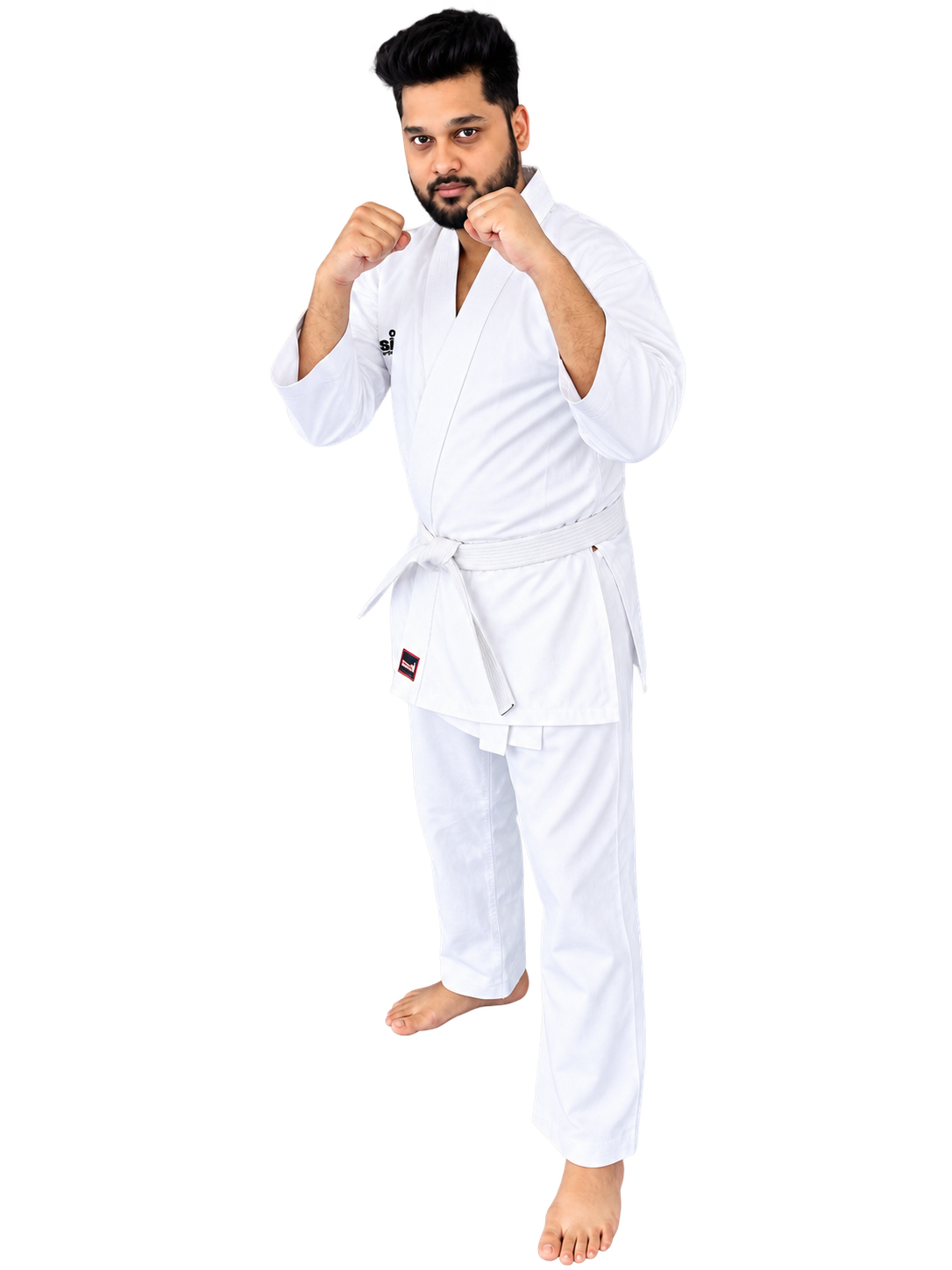
WARRIOR MODE
A structured Warrior Mode system combining combat-sport learning, strength, speed, endurance, mobility, breath control, recovery, reflexes, mental toughness, discipline, learning, relationships, purpose and continuous measurement.

COMBAT SPORTS
MMA, Boxing, Kickboxing, Wrestling, Kung Fu, Muay Thai, JKD, Jiu-Jitsu, Karate, Wing Chun, Krav Maga and Taekwondo.
PHYSICAL CAPACITY
Strength, speed, endurance, mobility, breath training, recovery and reflex development.
WARRIOR MIND
Stress inoculation, thought control, gradual fear exposure, discipline, emotional stability and modern courage.
MEASURE + EVOLVE
Track body, fitness, sleep, mood, training volume and relevant performance markers over time.
Combat Sports
The dedicated learning and training track for combat-sport disciplines included in the project.
MMA
Integrated striking + grappling.
Boxing
Footwork • guard • punches • defense.
Kickboxing
Striking • combinations • conditioning.
Wrestling
Takedowns • control • scrambling.
Kung Fu
Forms • coordination • movement.
Muay Thai
Striking • clinch • movement.
JKD
Adaptability • timing • distance.
Jiu-Jitsu
Grappling • positional work • escapes.
Karate
Balance • striking fundamentals.
Wing Chun
Structure • close-range movement.
Krav Maga
Awareness • defensive principles.
Taekwondo
Kicks • speed • flexibility.
Warrior Architecture
The broader framework combines physical preparation, combat skills, cognition, discipline, relationships, purpose, environment and measurement.
Health Assessment
Health history and clinician guidance; CAC score, DEXA, VO₂ max, grip strength, resting heart rate and blood pressure.
Nutrition
Vegetables, fruits, legumes, whole grains, nuts, seeds, olive oil, adequate protein and healthy fats; limit ultra-processed foods, sugary drinks and excess alcohol.
Strength
Squat, deadlift, bench press, overhead press, pull-ups, rows and carries with progressive overload, good technique and recovery.
Speed
Sprint mechanics, acceleration, plyometrics, jump training and agility drills.
Endurance
Zone 2 aerobic training, tempo work, intervals, hiking and progressively loaded carries.
Mobility + Flexibility
Dynamic warm-ups, joint mobility, yoga, static stretching after training and balance exercises.
Breath Training
Diaphragmatic breathing, slow nasal breathing and breath awareness. Advanced breath-hold training is treated cautiously and never in water without supervision.
Recovery
Sleep, stress management, light movement and relaxation techniques.
Martial Arts
Boxing, wrestling, Brazilian Jiu-Jitsu, Muay Thai and Judo.
Warrior Skills
Hiking, orienteering/navigation, first aid, survival skills, teamwork and obstacle courses.
Reflexes
Reaction drills, hand-eye coordination, ball drills and sport-specific practice.
Mental Toughness
Long-term goal pursuit, difficult but safe physical training, reflection, controlled exposure to challenges and stress-management skills.
Pain Management
Differentiate productive training discomfort from pain signaling injury; do not deliberately train yourself to ignore injury pain.
Discipline
Fixed sleep schedule, training schedule, meal planning, weekly reviews and habit tracking.
Learning
Science, psychology, nutrition, biomechanics and skill acquisition.
Brain
Memory practice, logic, mathematics, languages, chess and reading.
Relationships
Communication, emotional regulation, conflict resolution and leadership.
Purpose
Long-term goals, personal values, service to others and meaningful projects.
Environment
Ergonomics, light exposure, noise, air quality, workspace and training environment.
Continuous Measurement
Body weight, waist circumference, strength, VO₂ max or aerobic fitness, blood pressure, sleep, resting heart rate, mood, training volume and relevant biomarkers.
Fear, Stress + Emotional Control
The source material frames warrior development around controlled exposure, practical thought cues, discipline, emotional stability and modern courage.
Stress Inoculation
Gradual exposure examples include cold showers, hard workouts, sparring, public speaking, difficult conversations, challenging hikes with proper safety and controlled obstacle courses.
Breath Control
When panic begins: inhale through the nose for 4 seconds, hold for 2, exhale for 6, and repeat.
Control Your Thoughts
Use short practical cues such as “Stay calm. Assess. Move.” instead of emotional narratives.
Face Fears Gradually
Use repeated safe exposure for heights, public speaking and conflict, progressing from small situations toward more demanding ones.
Emotional Stability
Meditation, journaling, gratitude and self-reflection are listed as practices for self-control.
Modern Courage
Protect family, remain calm under pressure, stand up to injustice appropriately, keep promises, admit mistakes and walk away from unnecessary violence.
45–60 Minute Routine
The documented daily routine combines mental regulation, physical/combat training, recovery, study and reflection.
MEDITATE
10 minutes of meditation and controlled breathing.
10 MINTRAIN
30–45 minutes of strength or martial arts training.
30–45 MINRECOVER
5 minutes of cold shower, if medically appropriate.
5 MINSTUDY
10 minutes reading philosophy or military history.
10 MINREFLECT
5 minutes journaling: “What fear did I face today?”
5 MINCORE VALUES
Discipline • courage • physical fitness • tactical thinking • emotional control • service.
DAILYCOMPETENCE
Build confidence through competence rather than believing you are invincible.
LONG TERMFear Exposure Protocol
A separate documented protocol for gradually reducing fear of darkness and ghost-related thoughts through safe exposure and reality-based evaluation.
Learn How Fear Works
Darkness reduces visual information; the brain fills gaps and unfamiliar sounds can become more salient. Fear responses are not evidence of supernatural danger.
Dim Room
Sit in a dimly lit room for 10–15 minutes and focus on slow breathing.
Dark Room
Sit in a dark room with the door open and stay until anxiety begins to decrease.
Move Through Home
Walk through the house with lights off and notice ordinary sounds without automatically interpreting them as threats.
Familiar Safe Area
Take a short walk outdoors after sunset in a familiar, safe area, with someone if needed.
Reality Check
Ask: What evidence do I have? Could there be another explanation? Am I reacting to uncertainty rather than actual danger?
Daily Practice
5 minutes slow breathing, 10 minutes sitting in dim/dark conditions without distractions, 5 minutes writing what was feared, what happened and what was learned.
Build Capability
Strength training, running, martial arts, swimming, first aid, navigation, safe outdoor activities and consistent sleep are listed as confidence-building practices.
Warrior Performance Dashboard
Long-term tracking keeps the system measurable rather than purely motivational.
Modern Warrior Principles
The source material explicitly separates resilience from reckless aggression and emphasizes safety, judgment and de-escalation.
Emergency Readiness
Use first aid, CPR, emergency medical response, anatomy education and supervised simulated medical scenarios to build composure around injuries.
Multiple Attackers
The documented priorities are escape if possible, protect others if necessary, create distance, use verbal de-escalation when it can work, and fight only if there is no safer option.
Ancient Warriors vs Reality
The material notes that historical warrior stories involved circumstances very different from modern life. The enduring lessons listed are discipline, courage, physical fitness, tactical thinking, emotional control and service.
Warrior Philosophy
Suggested reading includes Meditations, The Art of War, The Book of Five Rings, On War, Extreme Ownership and Can’t Hurt Me.
365-Day Warrior Integration
The existing 365-day framework provides the annual progression labels used across the broader Human Evolution Protocol.
Foundation
Establish the base structure.
Build
Build capacity and consistency.
Capacity
Develop broader capacity.
Strength
Progress strength qualities.
Power
Develop power qualities.
Speed
Develop speed qualities.
Endurance
Develop endurance qualities.
Integration
Integrate the system.
Performance
Emphasize performance.
Refinement
Refine execution.
Peak
Peak the annual system.
Review + Evolve
Review data and evolve the next cycle.
Warrior Mode
Discipline • Courage • Physical Fitness • Tactical Thinking • Emotional Control • Service.
NUTRITION MODE
A structured nutrition system built from the nutrition data documented across my previous program files: food foundation, protein, carbohydrates, fats, hydration, performance nutrition, meal timing, body-composition nutrition, low-purine considerations, supplementation and nutrition tracking.
PROTEIN
Eggs, Greek yogurt, low-fat cottage cheese, double-toned milk, quinoa and oats. Documented target: approximately 120–140 g/day.
CARBS
Oats, quinoa, potatoes, sweet potatoes, fruit, whole grains and vegetables form the documented carbohydrate base.
FATS
Nuts, seeds, olive oil, flax and chia are the documented whole-food fat sources.
HYDRATION
Drink regularly, hydrate around training, replace fluids after hard sessions and maintain hydration in hot weather.

NUTRITION OBJECTIVES
Core nutrition domains documented in my previous athlete and nutrition programme material.
Protein Foundation
Use eggs, Greek yogurt, low-fat cottage cheese, double-toned milk, quinoa and oats as documented protein foods. The programme records a target of approximately 120–140 g/day.
Carbohydrate Base
Use oats, quinoa, potatoes, sweet potatoes, fruit, whole grains and vegetables as the documented carbohydrate and fibre base.
Healthy Fats
Use nuts, seeds, olive oil, flax and chia as the documented whole-food fat sources.
Hydration
Drink regularly, hydrate around training, replace fluids after hard sessions and maintain hydration during hot weather.
Performance Nutrition
Nutrition is structured to support training performance, recovery and gradual body-composition improvement.
Body Composition
The documented lean-physique nutrition infographic uses 1.8–2.2 g/kg protein, 3–5 g/kg carbohydrates and 0.8–1 g/kg fats for a 70 kg target physique.
Meal Timing
The training nutrition material documents keeping the last meal before 6:30 PM.
Nutrition Tracking
Track food consistency, protein intake and the nutrition variables used in the personal experiment.
FOOD FOUNDATION
The recurring food choices documented in my previous nutrition and hybrid-athlete pages.
Eggs
Whole boiled eggs are listed as a core protein food.
WHOLE FOODGreek Yogurt
Low-fat Greek yogurt is included in the food foundation.
DAIRYCottage Cheese
Low-fat cottage cheese is listed as a protein source.
DAIRYDouble-Toned Milk
Double-toned milk is included in the documented protein list.
DAIRYOats + Quinoa
Both are documented as carbohydrate, fibre and protein-containing foods.
WHOLE GRAINPotatoes + Sweet Potatoes
Both are included in the documented carbohydrate list.
STARCHFruit + Vegetables
Fruit and vegetables are recurring components of the documented food system.
MICRONUTRIENTSMACRO ARCHITECTURE
Macro targets and food categories explicitly documented in the previous programme material.
70 KG LEAN-PHYSIQUE MACROS
- Protein: 1.8–2.2 g/kg (125–150 g)
- Carbohydrates: 3–5 g/kg (210–350 g)
- Fats: 0.8–1 g/kg (55–70 g)
- Eat whole foods — high protein, complex carbohydrates and healthy fats.
DOCUMENTED NUTRITION RULES
- Last meal before 6:30 PM.
- Stay in a mild calorie deficit of 300–500 kcal/day in the documented lean-physique plan.
- Hydration, micronutrients and electrolytes are identified as important.
- Nutrition should align with training performance and recovery.
LOW-PURINE FRAMEWORK
Dietary points explicitly documented in the previous uric-acid nutrition material. This section preserves that source framing rather than adding new dietary rules.
Reduce / Limit
Beer and spirits; sugar-sweetened beverages; high-fructose foods and drinks; organ meats; large quantities of red meat; some seafood/high-purine animal foods; and excessive alcohol generally.
Potentially Helpful Foods
Adequate hydration, healthy weight management, low-fat dairy, vegetables, whole grains, fruits in appropriate portions, coffee where appropriate and Mediterranean-style dietary patterns.
Plant Purines
The source notes that plant foods containing purines are not automatically equivalent to meat and seafood for gout risk.
Diet + Uric Acid
The source notes that dietary purine restriction alone often produces a relatively modest reduction in serum urate compared with appropriate urate-lowering therapy when medication is indicated.
NUTRITION PREFERENCES
Food and ingredient preferences that appear in the documented nutrition material.
Whole Foods
Whole-food protein, complex carbohydrates, healthy fats, fruit and vegetables.
Nuts + Seeds
Nuts, mixed seeds, flax and chia are documented components.
Simple Food System
The nutrition material separates the food foundation from the supplement stack.
Processed + Sugary Foods
Training material documents controlling sugar and processed food and avoiding sugary drinks.
Low-Fat Dairy
Greek yogurt, low-fat cottage cheese and double-toned milk are documented.
Training Alignment
Food structure is aligned with training performance, recovery and gradual body-composition improvement.
SUPPLEMENT SEPARATION
The supplement list documented in the nutrition pages is kept separate from the food foundation.
Documented Stack
Marine Collagen • Glutathione • CoQ10 • Fish Oil • Curcumin • Magnesium • Melatonin • Vitamin B12 • Vitamin D3 • Ashwagandha KSM-66.
Planned Addition
NAD+ is listed as a planned addition in the documented programme.
Food Foundation
The programme explicitly keeps supplements separate from the food foundation.
Tracking
Nutrition tracking includes food consistency, protein intake and the nutrition variables used in the personal experiment.
NUTRITION TRACKING
The documented tracking architecture for the nutrition side of the personal experiment.
Food Consistency
Record whether the planned food structure was followed.
Protein Intake
Record daily protein intake against the documented target.
Hydration
Record hydration consistency, particularly around training.
Body Composition
Nutrition is linked to the documented gradual body-composition improvement objective.
Performance
Align food structure with training performance and recovery.
Review
Use the recorded nutrition variables as part of the wider personal experiment.
PERSONAL PERFORMANCE NUTRITION SYSTEM • Food Foundation • Macros • Hydration • Tracking • Review